Myth-busting, the kidney one
Is protein bad for your kidneys?
Short answer: that warning was written for people who already have kidney disease. It was never written for you.
Some links on this page are affiliate links. If you buy through them, I may earn a small commission at no extra cost to you.
Somebody says this to me about once a month.
"I would eat more protein, but I heard it is hard on your kidneys."
Heard it where? Usually from a cousin, a coworker, or a post from 2014 that will not die. So let's do this one plain, because this myth keeps women eating 40 grams a day and wondering why they are tired and hungry.
Where the warning actually came from
Here is the part nobody repeats. When someone has kidney disease, their kidneys cannot filter waste the way they should. Doctors put those patients on lower protein diets because protein leaves more waste for the kidneys to clear. Less protein, less work for kidneys that are already struggling.
That is real. That matters. If that is you, your doctor's number beats anything on this page, full stop.
But somewhere along the way, "people with damaged kidneys eat less protein" turned into "protein damages kidneys." Those are not the same sentence. One is a treatment. The other is a rumor.
What your body actually does with protein
Plain science, no white coat required. You eat protein, your body breaks it down into amino acids, and it uses those to maintain muscle, skin, hair, all of it. Whatever is left over gets filtered out, mostly as urea, and you pee it out. That filtering is not damage. That is the job description. Your kidneys filter around the clock whether you ate a steak or a salad.
One of those amino acids, leucine, does extra work. It flips the switch that tells your body to hold onto muscle. After 35 we start losing muscle just by existing, so that switch is a big reason I eat the way I do. I wrote the whole muscle piece here if you want it.
Working harder is not the same as getting hurt. Your heart works harder on a walk too. Nobody calls walking a heart hazard.
So how much are we even talking about?
This is the part that makes me laugh, in a kind way. The women worried about "too much protein" are almost never eating too much protein. Most of us were eating 40 to 60 grams a day and calling it plenty.
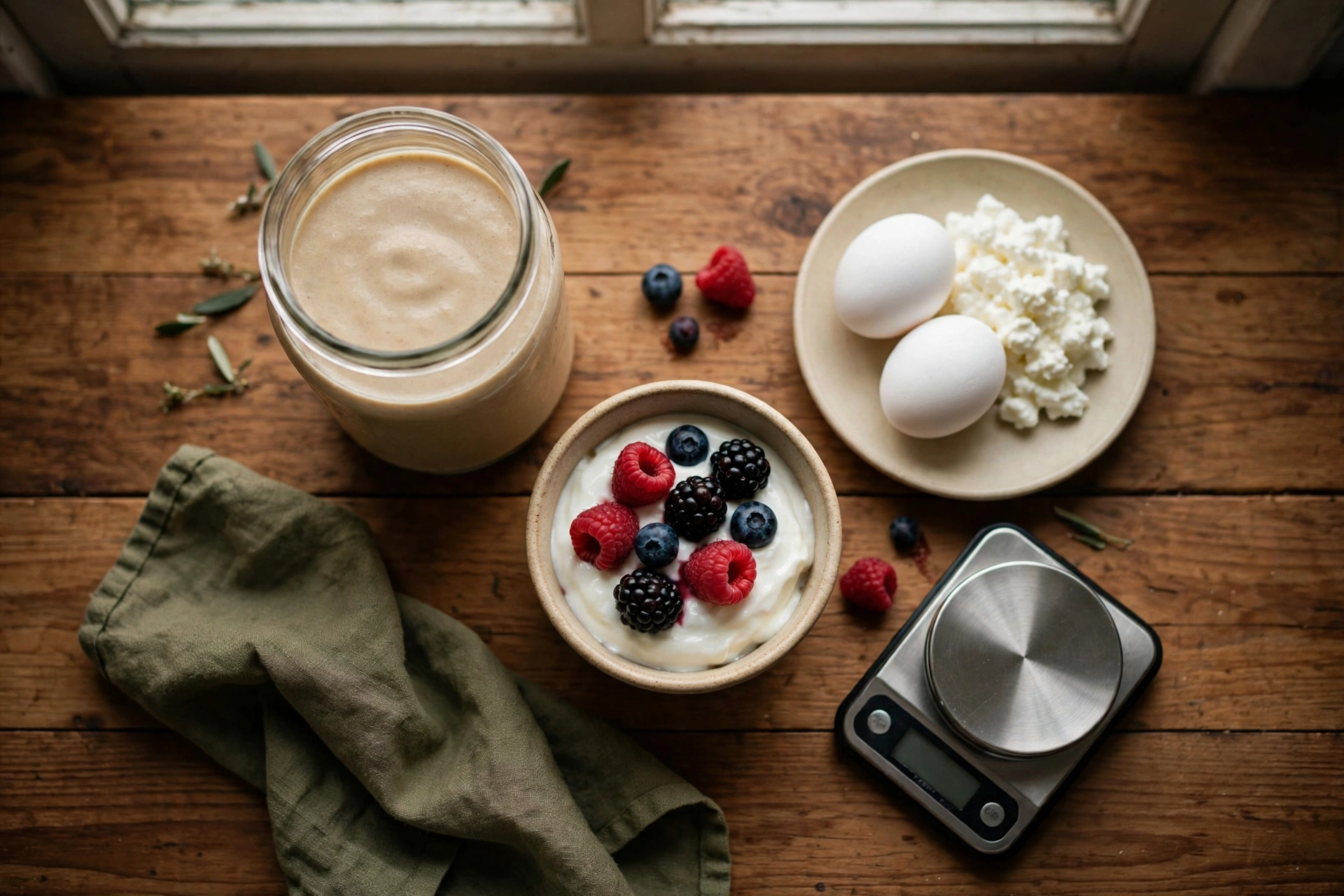
I land between 130 and 150 grams a day, and I got there by adding, not by loading up like a bodybuilder. A shake in the morning, Greek yogurt here, a cottage cheese cup there. The math is simpler than you think, and a little kitchen scale taught me more in a week than guessing did in a year.
If your kidneys are healthy, that range is normal food doing normal work. If you have kidney disease, kidney stones that keep coming back, or labs your doctor is watching, that conversation belongs to your doctor, not a blog. I mean that.
The shake question, since we are here
My mornings start with a shake, a habit I have had for years. The one I use now is Shaklee Life Shake. Shaklee is new to me, I switched at the start of October, so it gets zero credit for my 100 pound loss. That was years of habits before this tub ever showed up.
Why it earned its spot is on the label: 20 grams of protein per serving, 6 grams of fiber, 25 vitamins and minerals, 0 grams of sugar, with added leucine. There is that leucine again. Protein is the building material, leucine is the signal to use it.
Twenty grams in a glass is not an extreme diet. It is breakfast that finally counts.
The part underneath the question
Nobody asks me about kidneys because they love kidney facts. They ask because they finally found something that works and now they are scared it is too good to be safe.
I get that. I asked the same thing, standing in my own kitchen, scale on the counter.
You do not have to choose between taking care of yourself and being careful. Read the actual source of the warning. Ask your own doctor your own questions. Then eat your protein and stop apologizing for it.
So tell me, which protein myth have you believed the longest? This was mine for a solid year.
I am not a doctor or dietitian. This is general information from my own experience, not medical advice. Talk to your healthcare provider about what is right for you.
Your next step
Ten smoothies that taste like dessert
The free smoothie pack is how most women here start. Ten recipes, real protein numbers on every one, zero chalky shakes.
Psst
Want to do what I do?
If you love this stuff and ever thought about earning from your phone sharing products you actually use, come build with me. No cold DMs, no pressure, no weird.