From a woman living it
What to eat in perimenopause
I had a hysterectomy, kept my ovaries, and now they are not what they used to be. Here is what I eat, what changed, and what I wish someone had told me sooner.
First, my story in one paragraph
At 33 I had a hysterectomy for adenomyosis. Kept my ovaries. For a while everything seemed fine. Then slowly, things shifted. Sleep got weird. Energy dipped in ways that rest did not fix. Cravings showed up like uninvited guests. My ovaries are still there, they are just not doing what they used to do.
I am not a doctor. I am a mom who pays attention to her body and figured out what helped. That is what this post is.
Protein matters more now, not less
Here is the thing nobody told me. As hormones shift, holding onto muscle gets harder. And muscle is what keeps your metabolism from slowing to a crawl.
Protein is how you protect it. I aim for 130 to 150 grams a day, same as before, but now it feels less optional and more like the whole foundation. On the days I skimp, I feel it by 3pm. Every time.
If you take one thing from this post, take this: eat protein first at every meal, before anything else on the plate. That one habit does more than any supplement I have tried.
Sleep is a nutrition issue too
Nobody warned me that perimenopause would mess with my sleep. I used to fall asleep fine. Then suddenly I was wide awake at 2am for no reason, running through tomorrow's grocery list like it was urgent.
What helped: protein at dinner, not just breakfast and lunch. A real dinner with 30 plus grams. And cutting off the late-night snacking that was really just blood sugar doing gymnastics.
I also stopped pretending caffeine after noon was fine. It was not fine. It was never fine. I just finally admitted it.
The foods I lean on hardest now
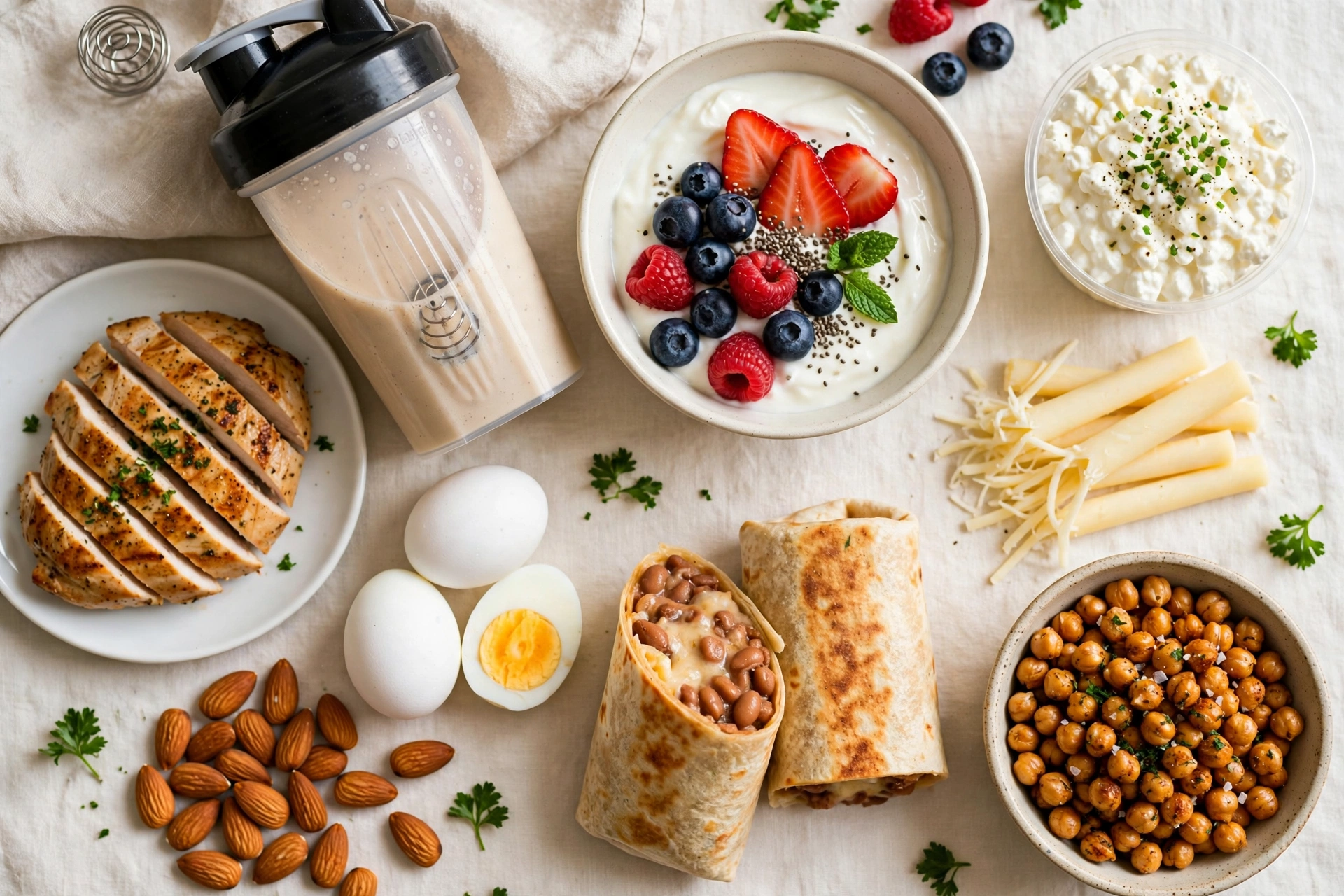
- Greek yogurt. Breakfast or snack, 20 grams of protein without thinking. The lactose-free kind, because my stomach has opinions now too.
- Eggs. Hard-boiled in the fridge at all times. Six grams each, zero effort.
- Chicken and turkey. Rotisserie chicken is the hardest-working food in my kitchen. Shred it, put it on everything.
- Cottage cheese. Sounds boring, works great. I do the little cups so I do not have to think about portions.
- Beans and lentils. Fiber plus protein. My gut thanks me, and fiber matters more than ever right now.
- Salmon. A couple times a week. Protein plus the good fats everyone keeps talking about.
- Berries. For the sweet cravings that show up stronger than they used to. A bowl of berries with Greek yogurt handles it.
What I stopped doing
I stopped skipping meals. Used to think skipping breakfast was fine, even virtuous. In perimenopause, skipping meals turned me into a cravings monster by dinner. Now I eat protein within an hour of waking up, even if it is just a shake.
I stopped doing the super low calorie thing. Eating 1,200 calories was never sustainable, but now it actively backfires. Undereating just tanks my energy and makes everything worse.
I stopped treating wine like it had no consequences. It always had consequences. I just feel them faster now.
The honest truth
Perimenopause did not require me to reinvent how I eat. It required me to take the protein-first stuff I was already doing and actually commit to it. No more casual about it. The margin for "I will just grab something later" got a lot smaller.
The women I talk to who feel the best in this season are not doing anything extreme. They are eating enough protein, sleeping as well as they can, and not running on fumes and caffeine. That is the whole secret. It is boring and it works.
I am not a doctor or dietitian. This is general information from my own experience living with perimenopause after a hysterectomy, not medical advice. Talk to your healthcare provider about what is right for you.
Your next step
Where are you in the shift?
Take the free hormone phase quiz. Six questions, three minutes, and you will get food and habit tips matched to where you actually are.
Keep reading